Best MMA Gloves for Sparring in 2026
Sparring gloves are the one piece of MMA equipment where the wrong purchase shows up immediately — on your training partner's face. The gloves sold for competition are deliberately thin, the gloves sold for bag work are deliberately heavy, and neither of them belongs in a live round. Picking the right pair for sparring is mostly a question of understanding three numbers and two materials.
This guide covers what separates a sparring glove from everything else in the shop, how to read the sizing, and which real pairs people actually train in season after season.
Sparring gloves are not bag gloves
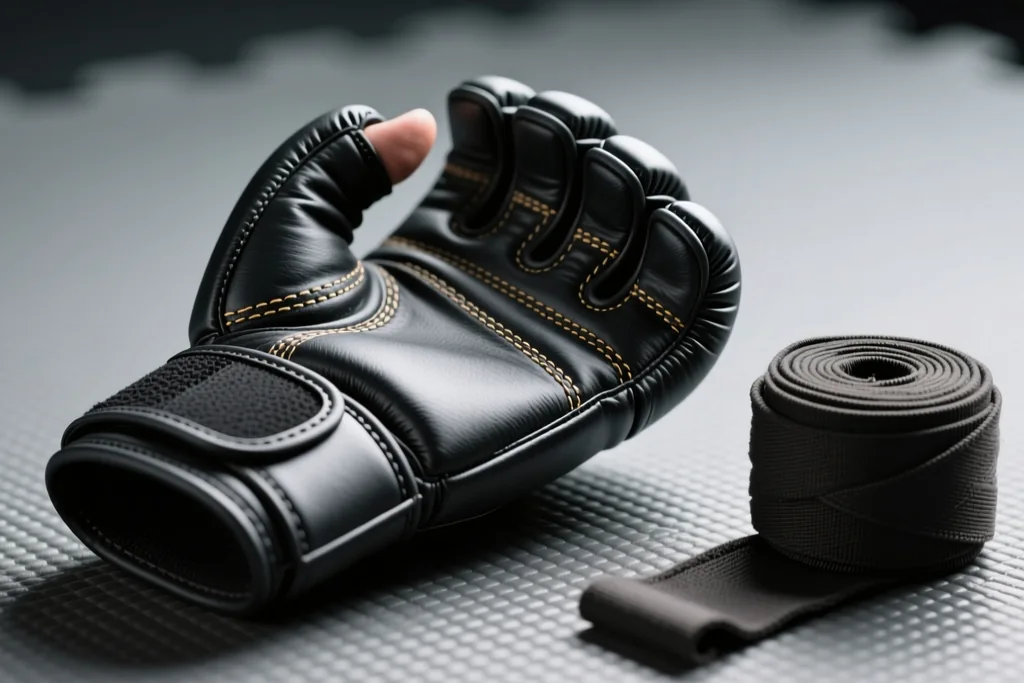
A bag glove is built to absorb repeated impact against leather and canvas. It carries thick, dense foam over the knuckles and a heavy wrist closure, and it protects the hand while you hit something that cannot be hurt. A sparring glove carries the same open-finger shape but distributes padding differently: more over the back of the hand and around the wrist, less of a hard striking surface over the knuckles.
The distinction exists because the risk changes. On the bag, the danger is your own hand. In sparring, the danger is the accumulation of impact you deliver to a training partner, and the knuckle padding on a bag glove — or worse, on a four-ounce competition glove — turns a routine jab into a cut.
Competition gloves are the third category and the one to avoid in the gym entirely. They are designed for a single fight, with minimal padding to allow grappling and to keep the hand small inside a cage fence. Fighters wear them for a bout, not for a Tuesday night of rounds.
What the sizes actually mean
MMA glove weights are measured in ounces and describe the padding, not the size of your hand. Four ounces is the professional competition weight, seven ounces is the standard training and sparring weight for most gyms, and eight ounces is a heavier option that some sparring partners prefer for extra protection.
Glove size — the physical fit — is usually sold separately and runs from small to extra large, often with a chart based on hand circumference. A glove that is too big slides on the wrist and leaves the knuckle padding sitting in the wrong place, which is worse than having no padding at all in the wrong spot.
Hand wraps matter as much as the glove. Wraps stabilise the wrist and the small bones of the hand, and they also take up volume inside the glove so that the padding lands where it should. Most gyms expect training partners to wrap before every session, and it is the single cheapest upgrade to how a glove performs.
- Four ounces: competition only, and not for sparring under any circumstances.
- Seven ounces: the standard sparring and training weight.
- Eight ounces: a heavier sparring option, useful for partners with heavier hands.
- Always wrap your hands before a round, whatever the glove weight.
What to check before you buy
Start with the wrist closure. A wide strap that wraps around the wrist and secures with hook and loop gives far more support than a narrow one, and it is the first thing that fails on cheap gloves. Next, look at the padding layout: you want consistent foam over the knuckles, a layer across the back of the hand, and a reinforced thumb that cannot fold back into an eye.
Materials matter in terms of lifespan rather than performance. Leather uppers and leather palms last longer and breathe better than synthetic equivalents, which is why a pair of leather sparring gloves usually outlives two pairs of cheaper gloves even though it costs more up front. Stitching should be tight and even, with no loose threads where the palm meets the finger openings.
The table below sets out the categories as they are actually sold, and what each one is for.
| Type | Typical weight | Best for | What to check |
|---|---|---|---|
| Competition glove | 4 oz | Sanctioned bouts only | Federation approval, minimal padding |
| Sparring glove | 7 oz | Live rounds and drilling | Wide wrist strap, layered knuckle foam, leather palm |
| Heavier sparring glove | 8 oz | Partners with heavier hands | Fits the hand without sliding, still open fingered |
| Bag and pad glove | 7–10 oz | Heavy bag, mitts, conditioning | Dense knuckle foam, thick wrist closure |
| Grappling glove | 4–6 oz | Wrestling and submission work | Low profile, flexible fingers, no hard edges |
Two-thirds of the decision sits in the top half of that table: buy one pair for the bag and one pair for sparring, and keep them separate. Gloves that have been pounded into a heavy bag for months lose their foam structure, and those dead gloves are exactly the wrong pair to bring to a live round.
Real pairs people train in
Most gyms converge on the same short list of brands for a reason: they survive. Venum's sparring models, sold as the Challenger and Kontact lines, are the most common sight in beginner and intermediate gyms, and they are priced as a first serious pair. Hayabusa's training gloves, including the T3 range, sit a step up in build quality with thicker padding and a wider wrist strap.
RDX covers the budget end with a wide range of sizes and a synthetic build that holds up reasonably for a first year. Sanabul's essential line is the popular value option for people who want two pairs without spending much. Fairtex is the name to know if you also train Muay Thai, since its gloves are built with that sport's clinch work in mind.
None of those choices will make you a better fighter. What they will do is let you spar often enough to get better, without your hands or your partner paying for it, and that is the entire job of a training glove.
Care, hygiene and when to replace
Gloves do not get cleaned by the gym, so the routine is yours: take them out of the bag as soon as you get home, wipe the liner with a disinfectant wipe, and let them dry with the fingers open rather than folded shut. Hand wraps go in the washing machine with the rest of the training kit, every single session.
Replace sparring gloves when the foam over the knuckles compresses and loses its spring, when the wrist strap stops holding tight, or when the seam between palm and finger openings starts to split. In a gym that trains four or five times a week, a mid-range pair usually lasts about a year of sparring before it becomes a backup pair for the bag.
Buying for sparring is really buying for the long game. The pair that fits your hand, holds your wrist and protects your partner is the pair you will still be using when the technique starts to work, and that is a much better return than saving a few notes on the cheapest gloves in the shop.