Shin Guards and Mouthguards: The Kit That Saves Your Season
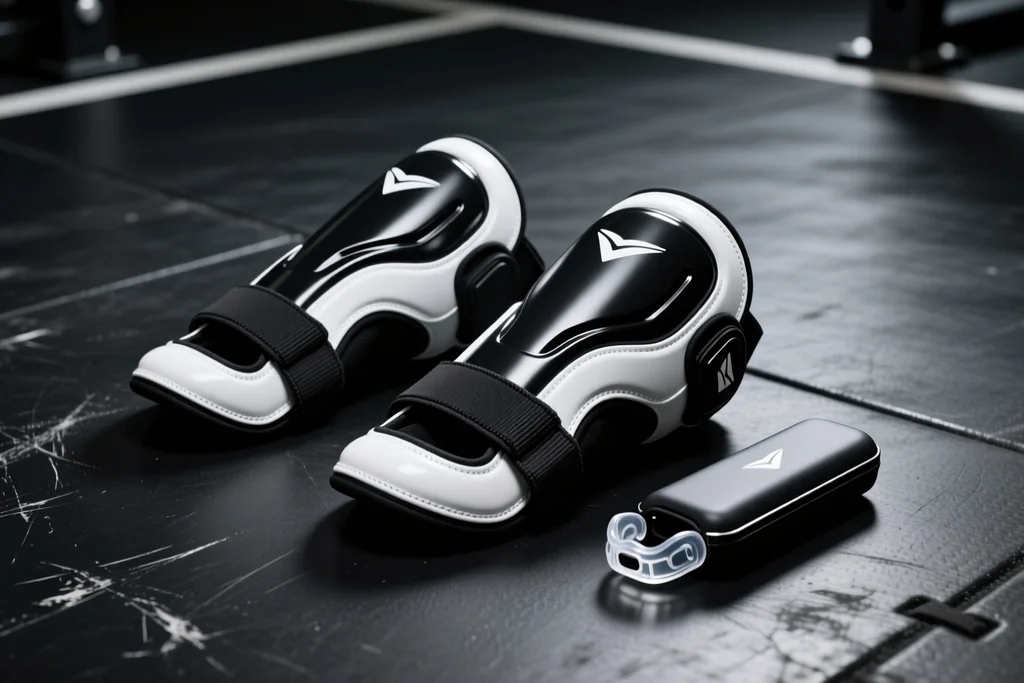
Shin guards and a mouthguard are the two pieces of kit that separate a training session you walk away from and one that costs you a month. Low kicks are thrown in almost every sparring round, they land on the hardest part of an opponent's leg, and they are checked with the shin — which is exactly the collision a pair of guards is designed to survive.
The good news is that both items are cheap relative to the injuries they prevent, and choosing them takes about ten minutes once you know what you are looking at.
Why shin guards matter in MMA sparring
A checked low kick is two shins meeting at speed. Without guards, the result is usually a deep bruise on both legs, and repeated bruising builds up a bone-density response that is fine for a professional on a fight camp schedule but painful for anyone training three times a week. With guards, the same exchange becomes a technical problem — who times the check, whose stance holds — rather than a durability contest.
Guards also unlock drilling. Most gyms allow harder low-kick work, and harder kicking practice, only when both partners are wearing them. If you want to improve the part of the game that decides the majority of modern kickboxing-influenced MMA fights, the guards are what makes the practice possible.
They protect the knee as well, which is the joint most people forget about until a half-checked kick twists the leg. Even a low-profile guard changes the angle at which an incoming kick arrives.
The three types worth knowing
Slip-on guards are a sleeve of elastic and foam that pulls over the foot and up the shin. They are light, quiet and the closest thing to wearing nothing, which makes them the preferred choice for lighter sparring and for kickboxing drills where footwork matters. Their weakness is movement: as they age, they rotate around the leg.
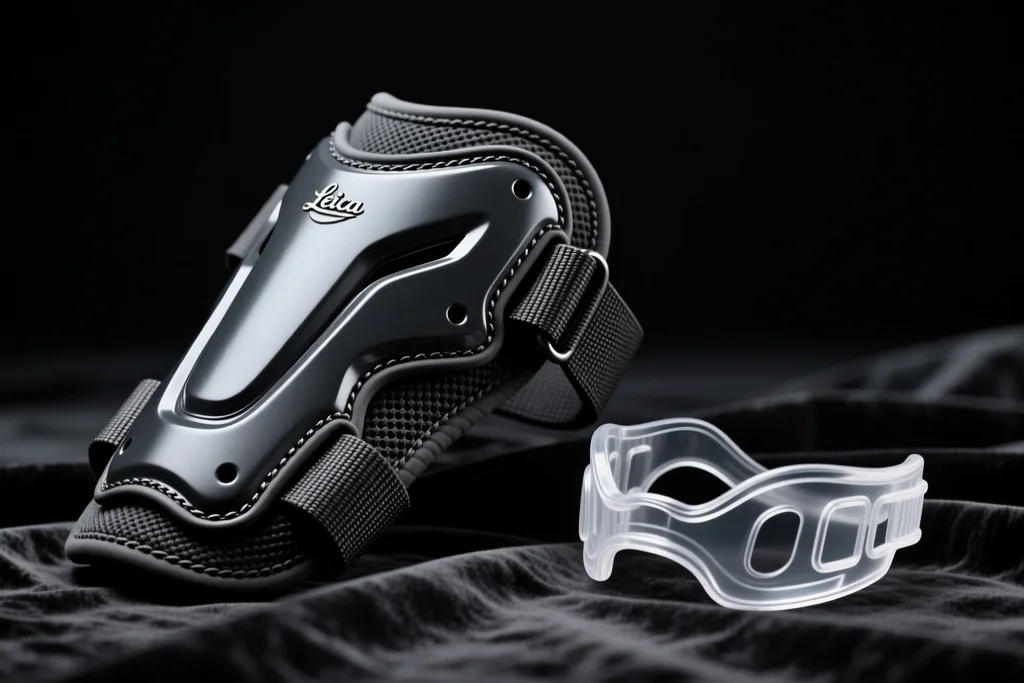
Strap guards cover the shin and the instep with padded panels that are pulled tight with two or three straps, often behind the calf and over the foot. They stay in place far better under hard kicks and are the standard choice in MMA gyms, at the cost of a little bulk around the ankle.
The third option adds a knee pad, either built into a strap guard or worn as a separate sleeve. Anyone who trains takedowns on a hard mat will want the knee covered, and anyone with a history of knee impact will want it regardless of how the guard is described on the box.
- Slip-on: lightest feel, best for kicking drills and technical sparring.
- Strap: best all-round performance under hard low kicks.
- Strap with knee pad: the choice if you also wrestle or shoot takedowns.
Mouthguards: boil and bite, or custom
A boil-and-bite mouthguard is softened in hot water, shaped around your teeth and cooled in place. It costs a fraction of a custom guard and protects the teeth, the lips and — to a limited degree — the jaw. Its weakness is fit: it is thicker than a custom guard, it can loosen over months, and a loose guard spends rounds being pushed back into place instead of being ignored.
A custom guard is made from an impression of your teeth, either by a dentist or through a mail-order kit, and it is thinner, more stable and easier to breathe and speak around. For anyone sparring regularly, the difference in comfort is obvious within one session, and the guard does not move when a punch lands on the jaw.
Whichever route you take, two habits matter. Replace the guard when it loses its shape or shows bite-through, and clean it every session — a mouthguard lives in a warm, wet, dark environment, which is exactly what bacteria like.
Fit, care and the rest of the kit
Shin guards should cover from just below the knee to the top of the foot, with no gap on the inside of the shin where the check actually lands. Test the fit by throwing a few kicks into a bag: if the guard rotates on the leg or slides down over the ankle, it is either the wrong size or the straps are too loose to hold the panel.
Leather panels outlast synthetic ones and breathe better, while synthetic guards are lighter and cheaper and often drier to wear. Both need airing after training and a wipe down with a disinfectant cloth, for the same hygiene reasons as gloves.
The table below compares the kit you will be offered when you buy your first set of guards and a guard for your teeth.
| Item | Type | Best for | What to check |
|---|---|---|---|
| Slip-on shin guard | Elastic sleeve | Kicking drills, light sparring | Does not rotate when you pivot on the ball of the foot |
| Strap shin guard | Panelled, 2–3 straps | Hard low-kick sparring | Coverage of the inside shin, tight but not cutting |
| Knee-pad guard | Strap guard plus knee | Wrestling and takedowns | Pad stays over the kneecap when the knee bends |
| Boil-and-bite mouthguard | Moulded at home | Beginners and occasional sparring | Fit after cooling, thickness, no bite-through |
| Custom mouthguard | Impression based | Regular sparring and competition | Comfort while breathing hard, stability on the jaw |
Everything in that table costs less than a single month of membership at most gyms, and each line replaces a specific injury. The guards are the cheaper half of a fight kit and the half that most beginners skip, then buy after the first bruise.
What to buy first
If you are starting from nothing, buy strap shin guards with basic knee coverage and a boil-and-bite mouthguard. That combination covers the two most common training injuries in striking sparring — a checked kick to the shin and an impact to the jaw — for the price of a couple of sessions.
Add a second, thinner slip-on pair later, for the days when you are drilling footwork and want to feel the mat. Add the custom mouthguard when sparring becomes a weekly habit rather than an occasional experiment.
A guard that fits and stays put is worth more than a guard with a famous label on it. The whole purpose of the kit is to let you train harder, more often and with less fear, and the cheapest way to get there is to buy the basic version of both items, wear them every session and replace them the moment they stop doing their job.